Microbursts
Microbursts are short, intentional resets that support learning, not pause it. More than “brain breaks,” they are strategic moments that shift classroom energy, improve readiness, and help students re-engage with focus and purpose.


Why Microbursts Belong in the Classroom.
Students are being asked to stay seated, focused, and regulated through long learning blocks in a world shaped by distraction, stress, screen exposure, and rising mental-health needs.
-
A recent 2025 systematic review published in Frontiers in Public Health examined 22 school-based studies exploring the impact of short physical activity breaks (often called “brain breaks”) on classroom behavior, executive function, and physical fitness.
These studies included over 3,600 students aged 5–18 and were conducted across multiple regions, including:
Canada and the United States (North America)
Spain, Italy, Norway, Switzerland, England, and the Netherlands (Europe)
Australia
Key Findings
Classroom Behavior: Most studies showed improved on-task behavior after short activity breaks.
Executive Function: Results were mixed—some improvements in attention and working memory.
Physical Fitness: Some gains were observed.
Implementation: Effective breaks were typically:
4–10 minutes long
Done 2–5 times per week
Easy to implement without special equipment
Bottom Line from the Research
Short bursts of physical activity during the school day:
Help students re-engage with learning
Improve focus and behavior in the short term
Are practical and scalable in real classrooms
-
While this body of research validates the importance of movement, it also reveals a significant limitation: The overwhelming focus is on Physical Activity (PA), while “Calm” and “Focus” states are largely underdeveloped or missing.
Most interventions emphasize:
Movement
Intensity
Physical exertion
But they do not systematically address:
Emotional regulation
Nervous system settling
Cognitive centering
Intentional focus-building
In other words, the research largely treats breaks as: “energy resets” — but not as full-spectrum regulation tools.
-
Both research and classroom experience reinforce a simple truth:
Students don’t just need movement. They need regulation.
Kids—like adults—cycle through periods of attention and inattention throughout the day. By middle and high school:
20–30 minutes of focused learning typically requires a
3–5 minute reset (Willis).
Breaks are not interruptions to learning—they are part of it.
Neuroscience shows that:
Learning is strengthened during pauses, not just during practice
Breaks help the brain consolidate and process information
Activities like movement, laughter, music, and connection:
Increase dopamine
Improve mood and engagement
Restore cognitive readiness
Physical activity specifically:
Increases blood flow and oxygen to the brain
Helps students recover from fatigue
Supports re-engagement with tasks
However, these benefits depend on how the break is designed.
-
Traditional language like “brain breaks” can unintentionally frame these moments as:
Time away from learning
A pause from academic work
A more accurate and effective framing is: These are not breaks from learning — they are shifts in how learning happens.
This is why we use the term:
JoyDot Microbursts” (or Sensory / Learning Boosts)
These are short, intentional interventions designed to:
Reset the nervous system
Rebalance energy
Prepare the brain for what comes next
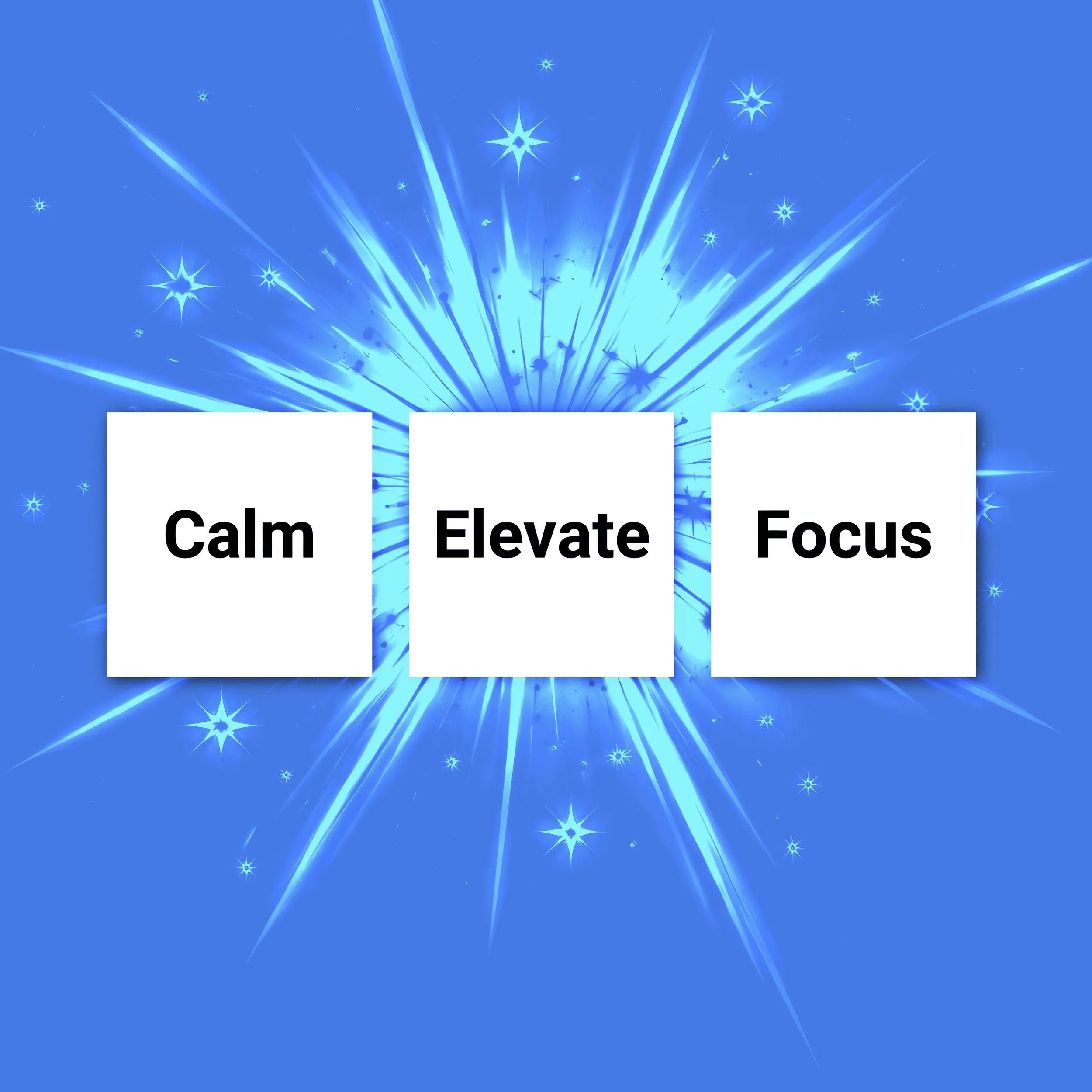
The JoyDot Microburst Framework.
Based on both research and extensive classroom experience, JoyDot organizes microbursts into three clear categories:
Calm Energy
Settles the nervous system
Reduces overwhelm
Brings students back to center
Elevate Energy
Increases alertness and engagement
Uses movement, rhythm, and novelty
Re-energizes the room
Focus Energy
Builds attention and mental clarity
Strengthens cognitive control
Helps students “lock in”
Real Classrooms
We adapted our Microburst framework to fit the actual reality of today’s classrooms.
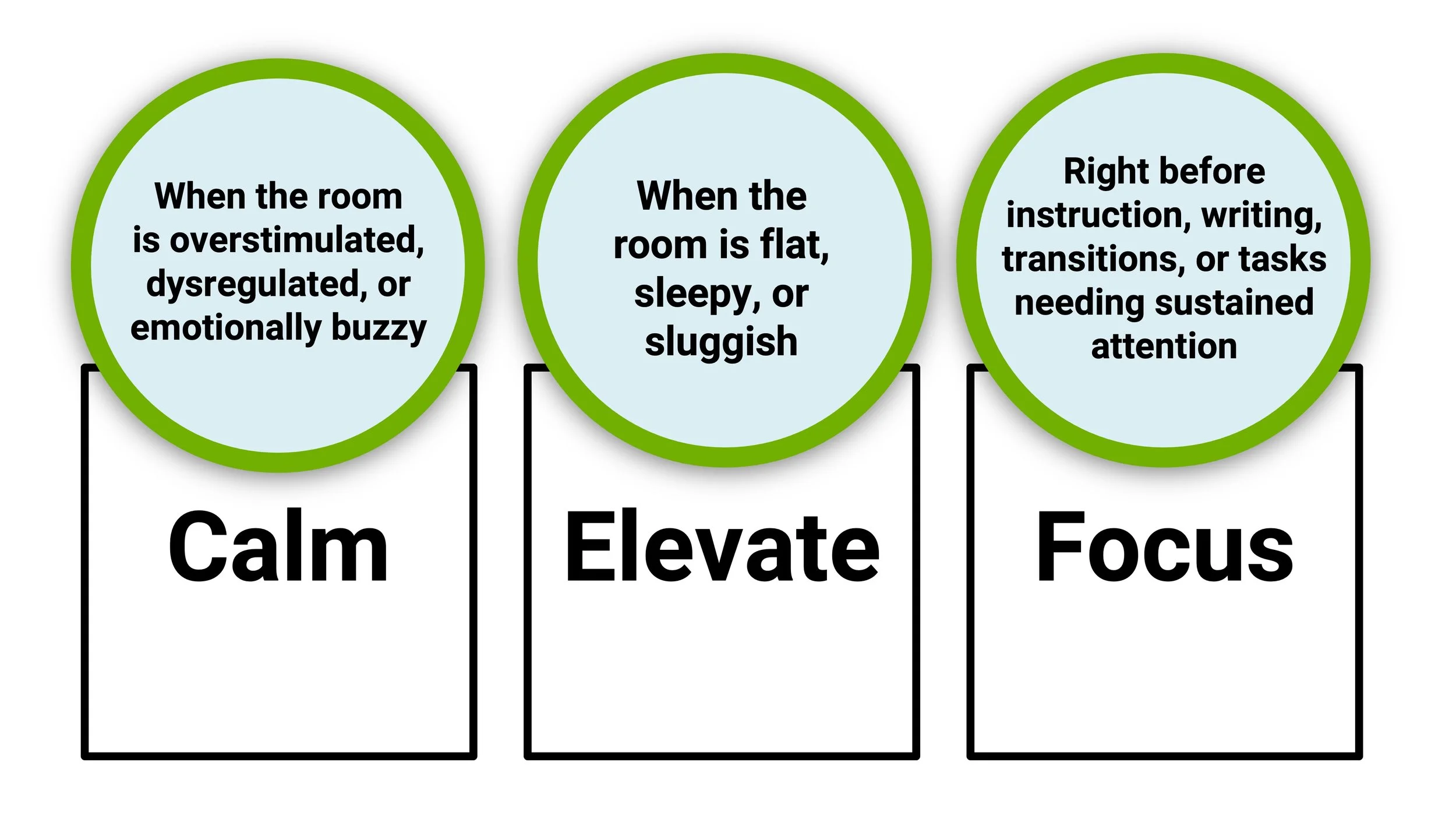
The power of Microbursts is not just the activity — it’s knowing which kind of energy the room needs in that moment.
Why it Works for Schools
It was built in partnership with students and educators — not just from theory.
-
Over years of workshops (K–12), a consistent pattern emerged:
Students don’t all need the same reset
Teachers need clarity, not complexity
Simplicity drives adoption and consistency
While some neuroscience frameworks can become:
Highly technical
Difficult to implement in real time
Our model focuses on:
Clarity, speed and ease of use
Integrates physical + emotional + cognitive regulation
Fits within existing class time (3–7 minutes)
Require no extra resources
Support all students, including those with regulation challenges
Enhances—not interrupts—learning time
-
The evidence is clear:
Movement matters
Breaks matter
Timing matters
But what matters most is intentional design, ease of use, rapid adoption while aligning with research and remaining practical and intuitive for teachers.
By integrating Calm, Focus, and Elevate, JoyDot Microbursts move beyond traditional “brain breaks” to deliver:
• Better classroom behavior
• Improved student readiness
• Stronger learning outcomes