Lessons from the Sunflower
You made it! Woo hoo!
Overview.
In a world where children are navigating anxiety, disruption, and uncertainty at younger and younger ages, we need new ways to teach resilience — not as a theory, but as something they can see, feel, and remember.
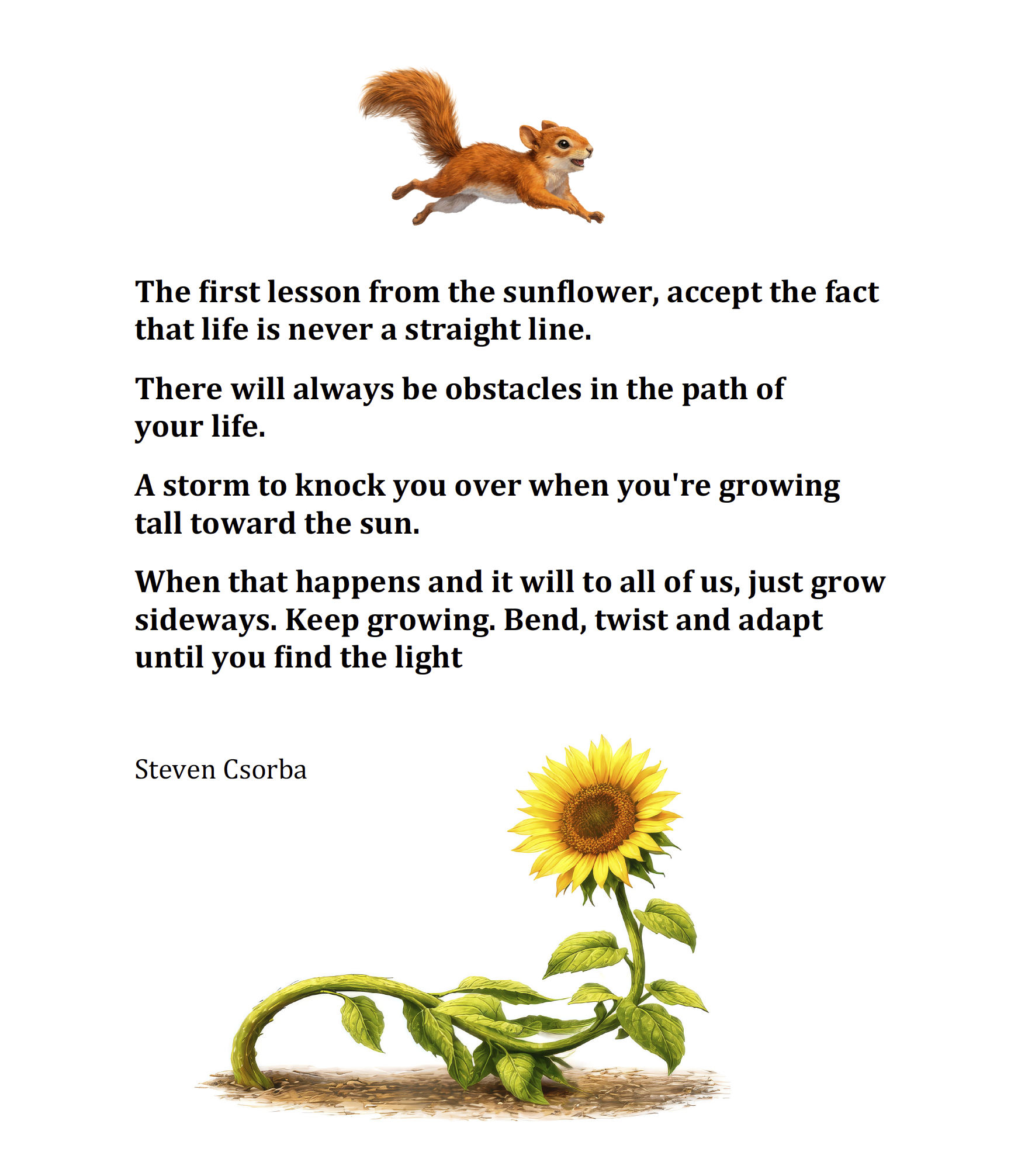
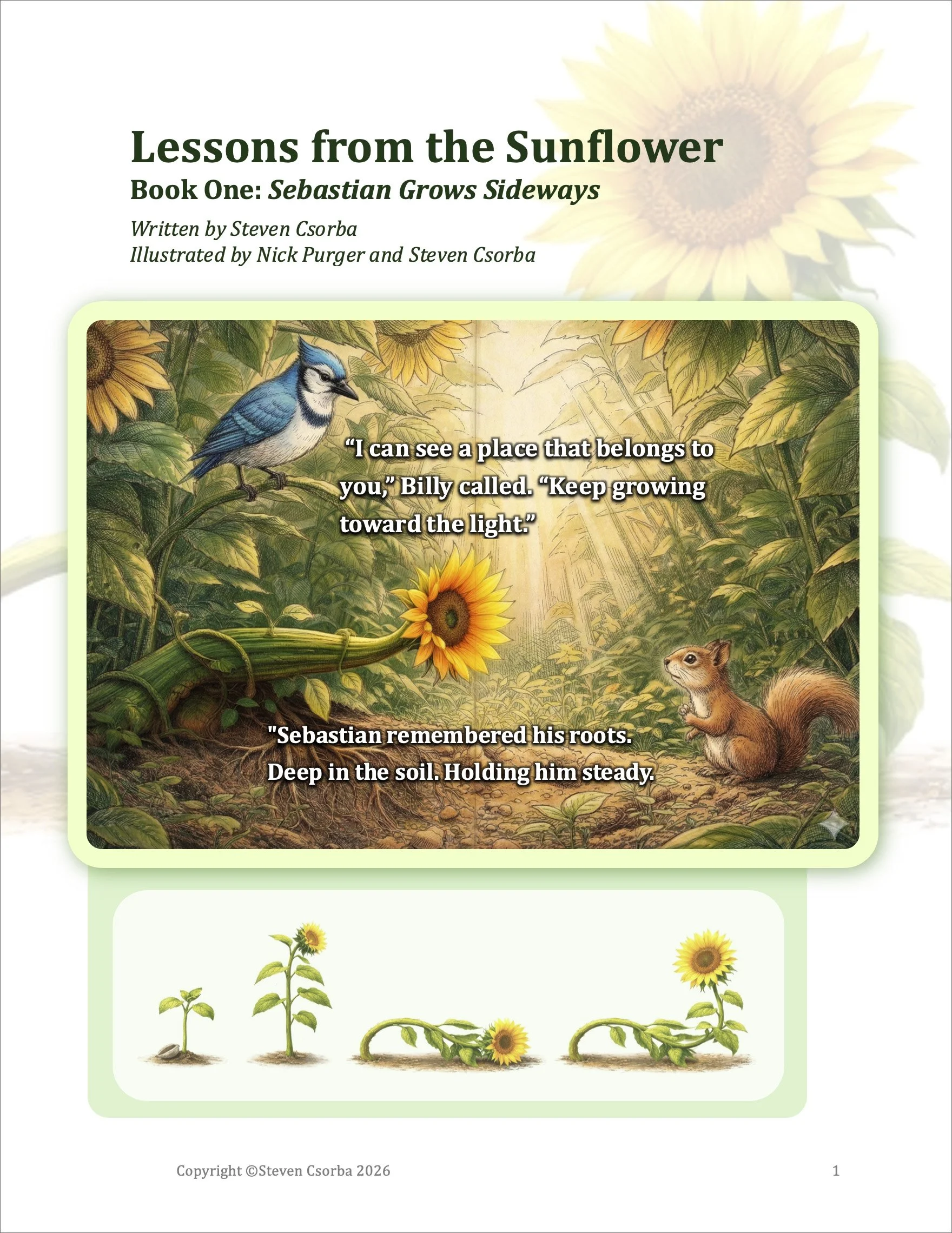
Lessons from the Sunflower – Book One: Sebastian Grows Sideways is an emerging hand-illustrated children’s book concept built around one foundational truth: life is never a straight line.
-
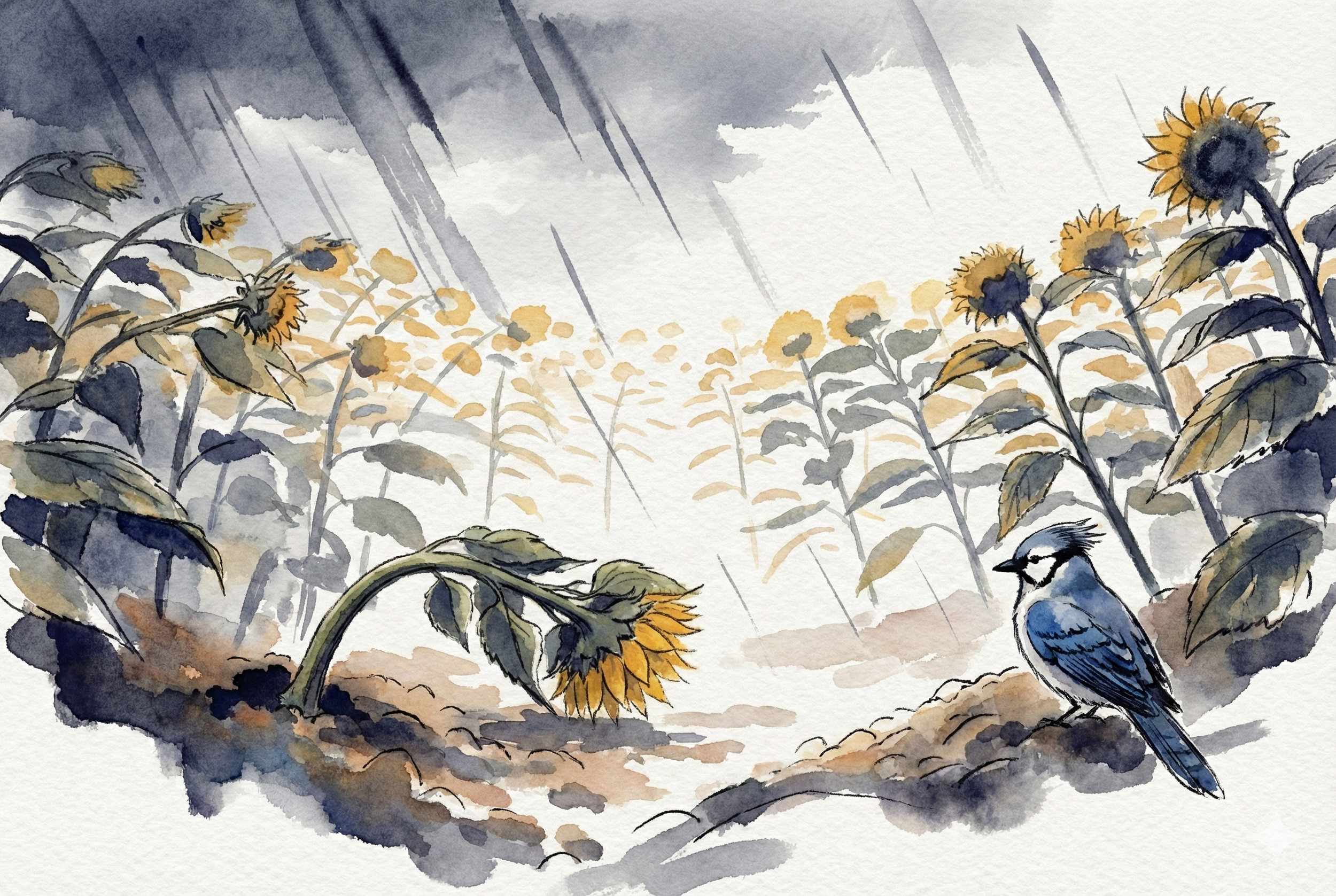
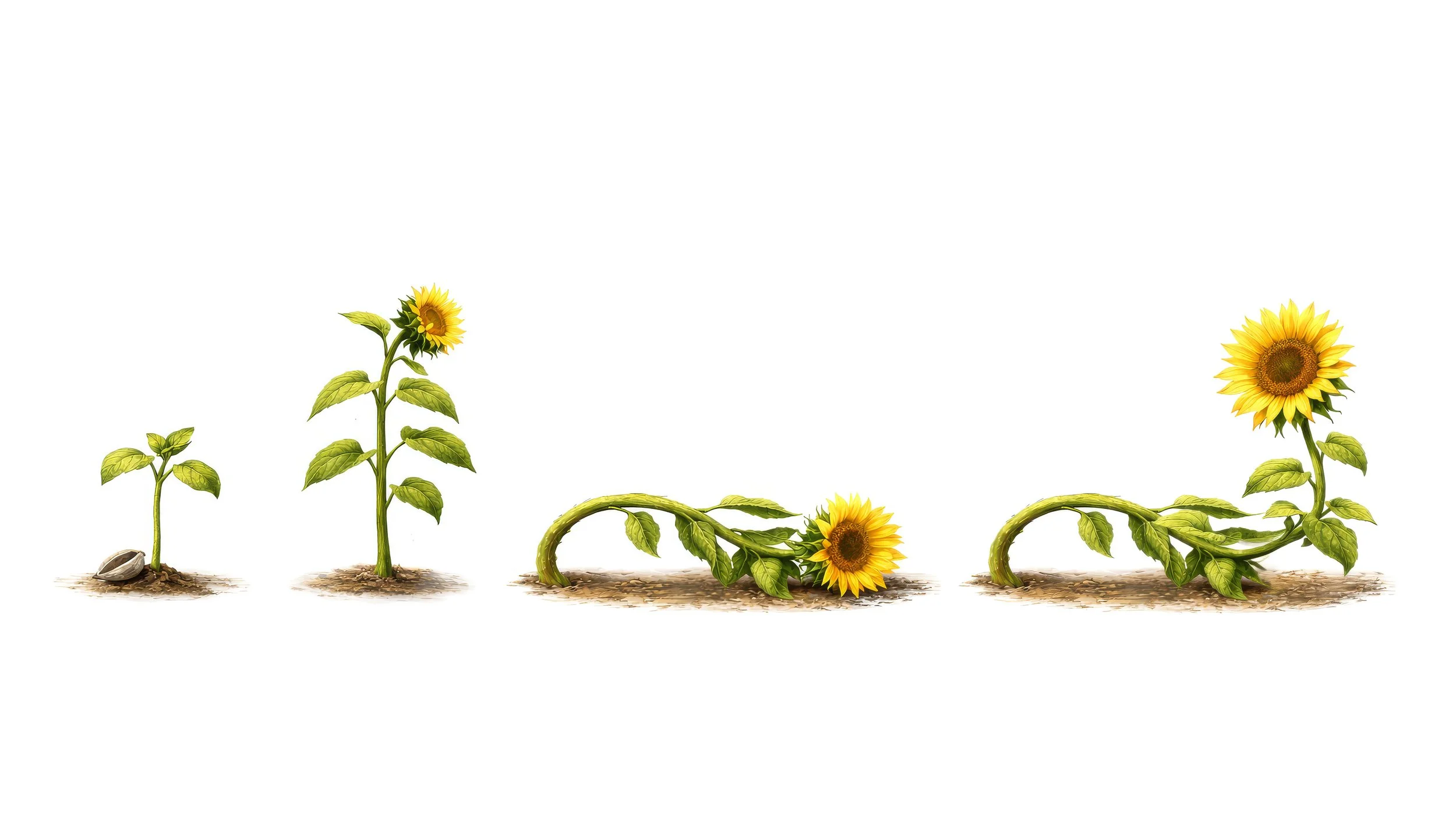
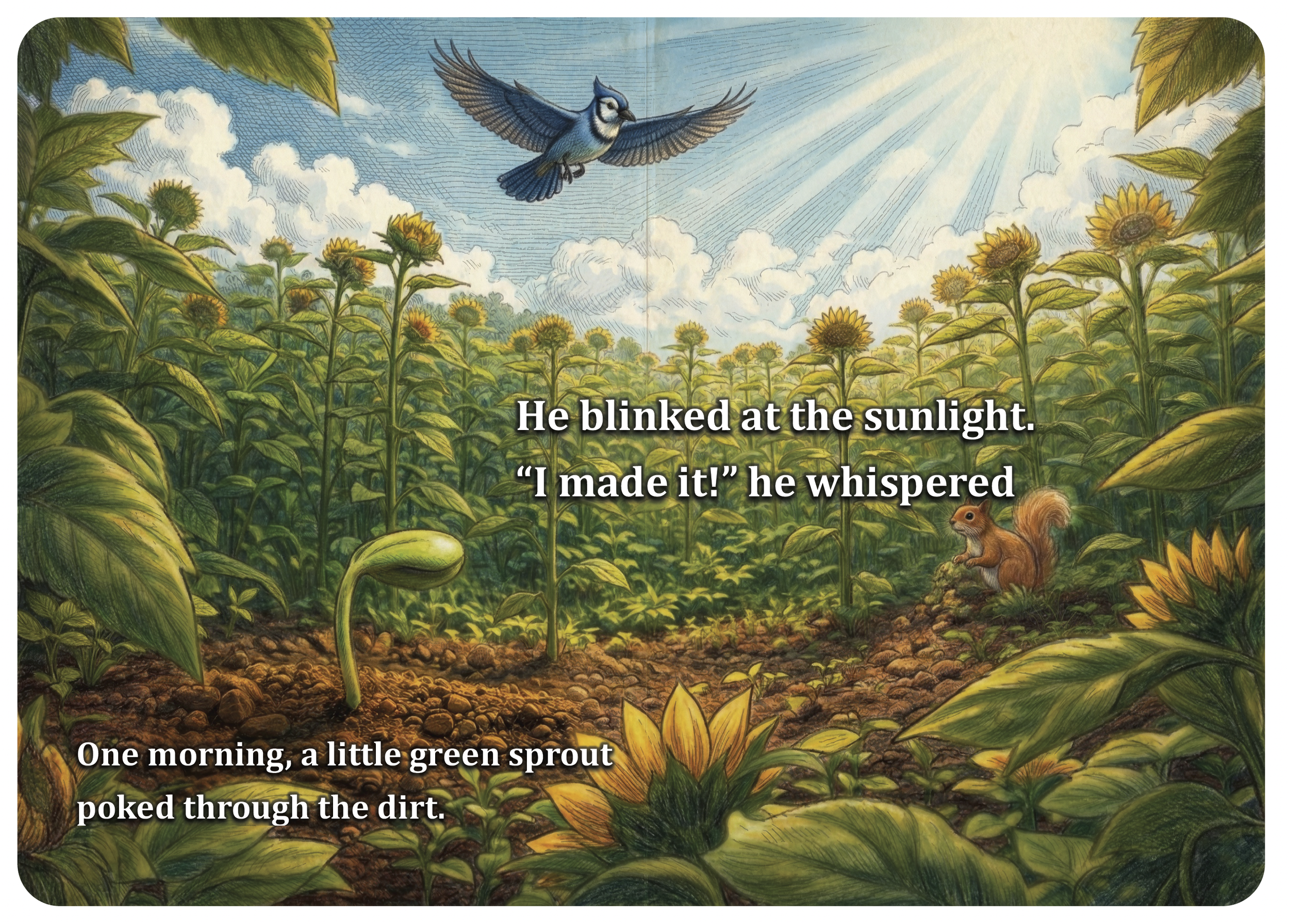
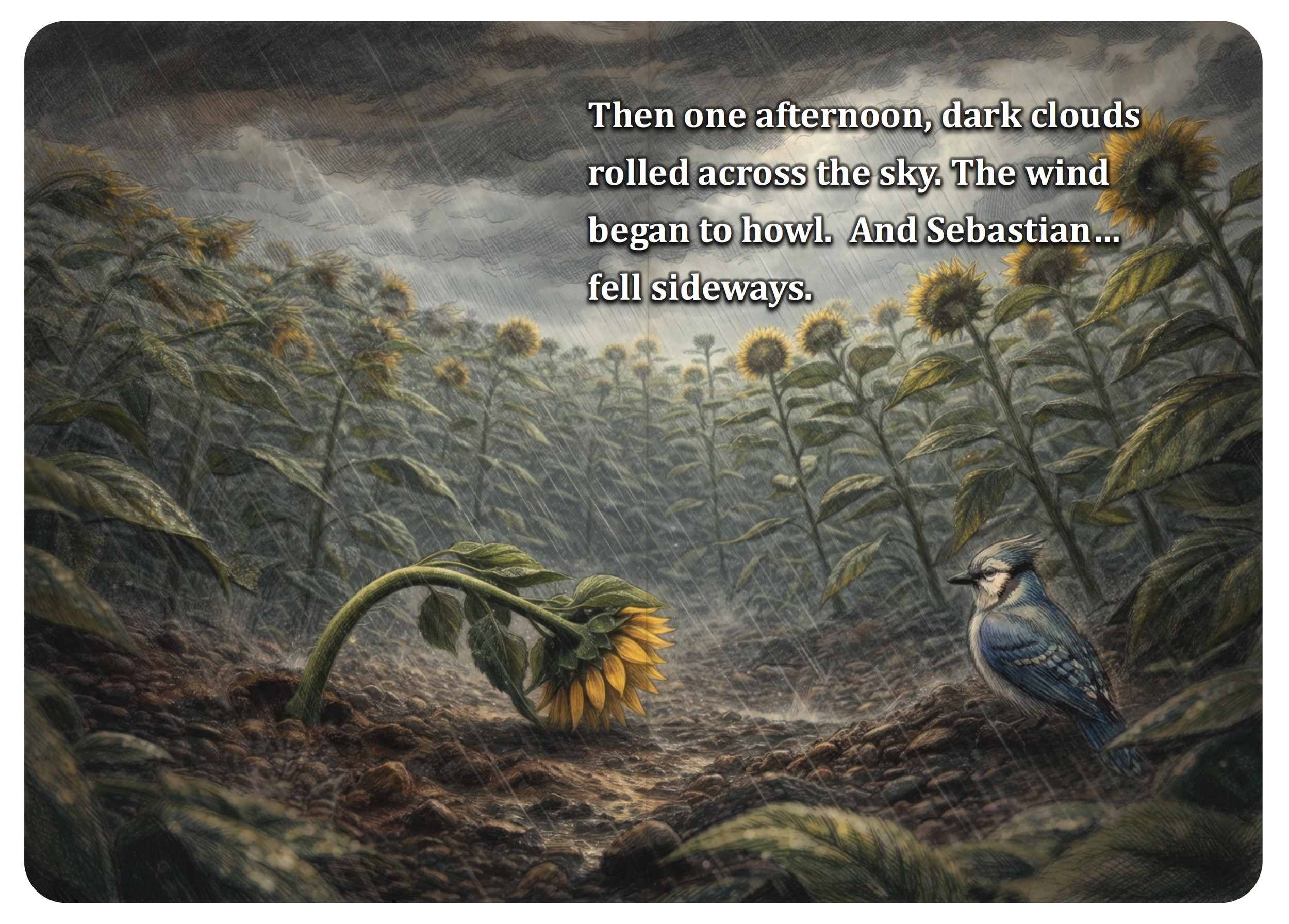
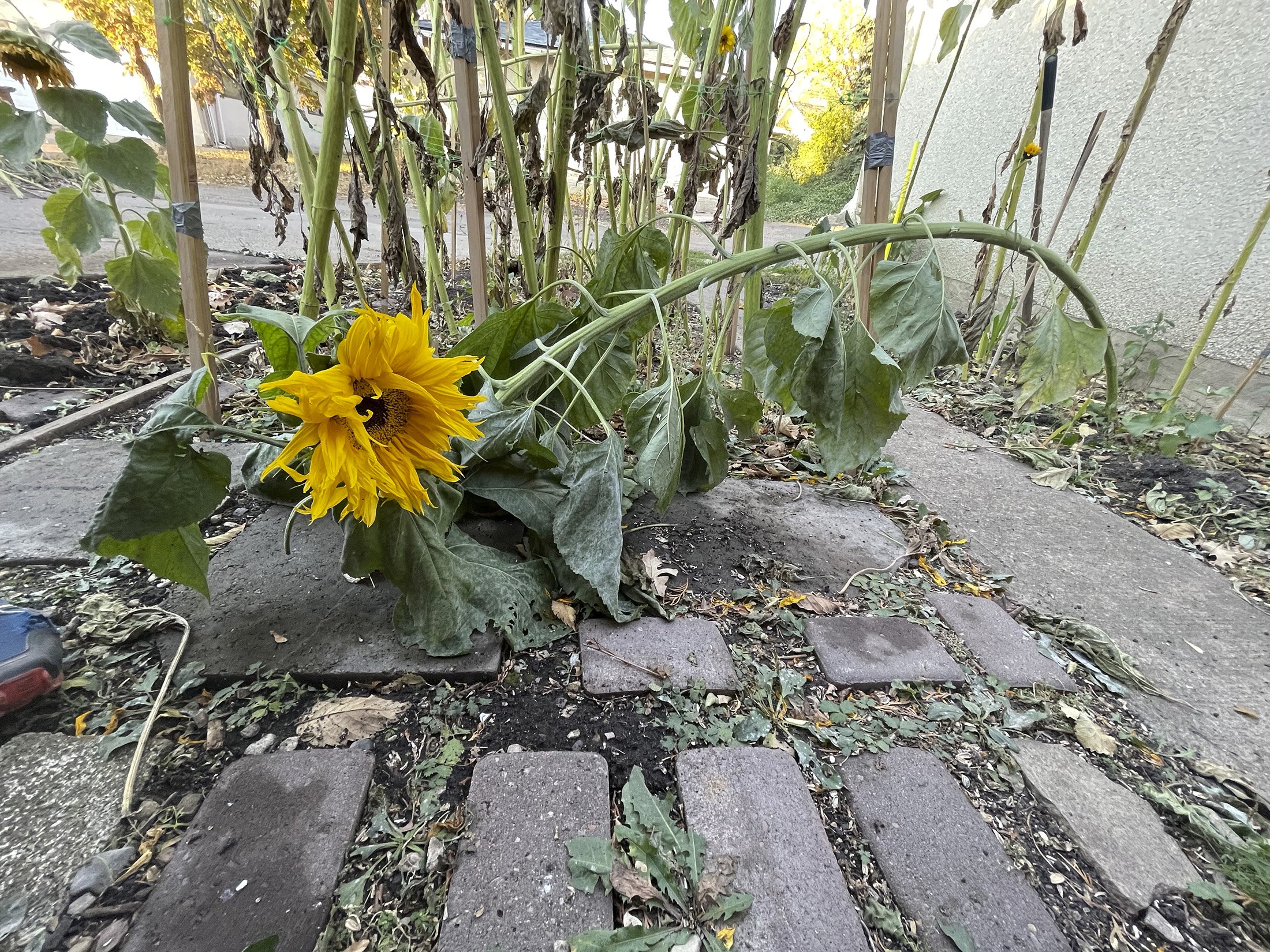
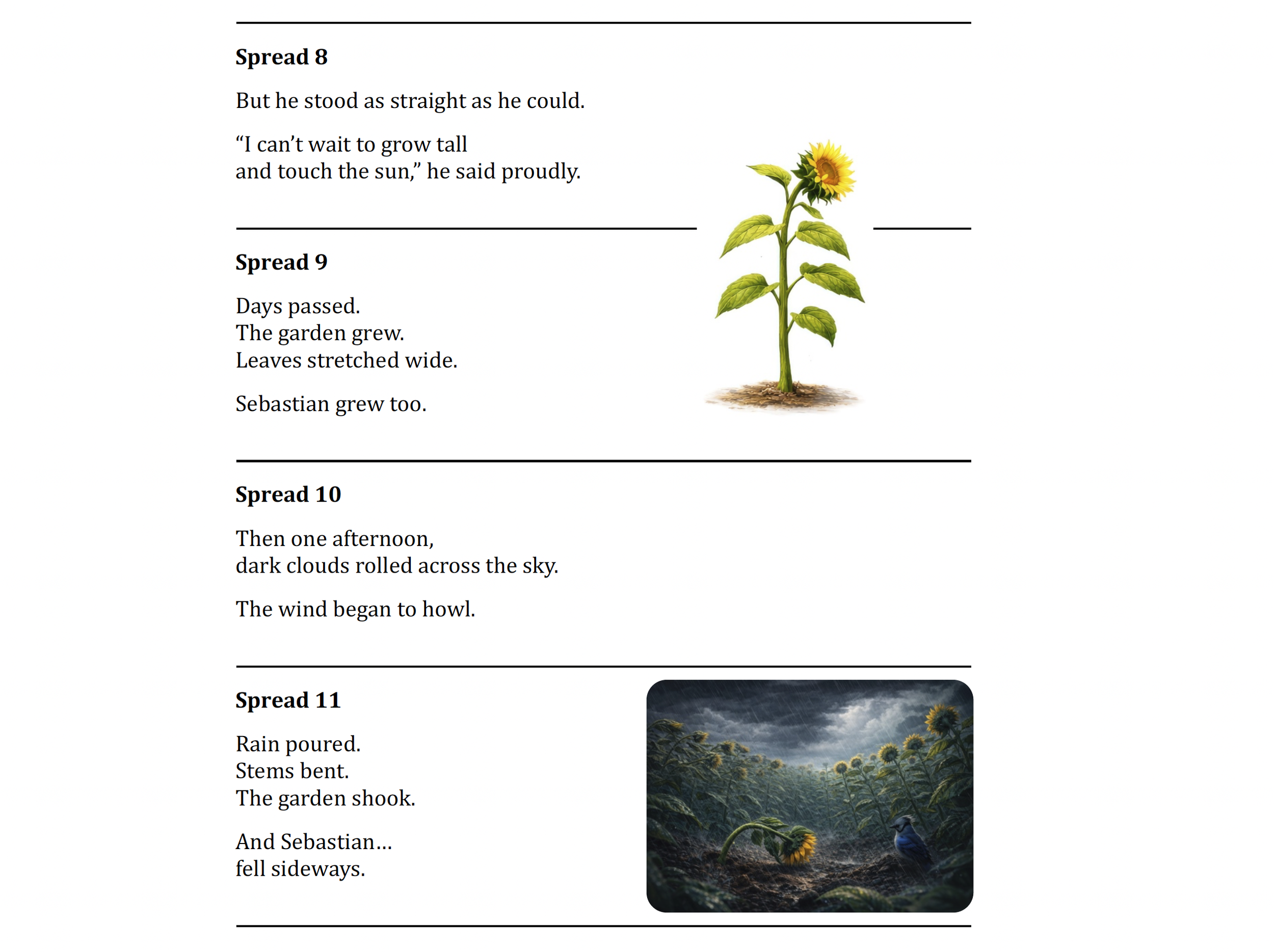
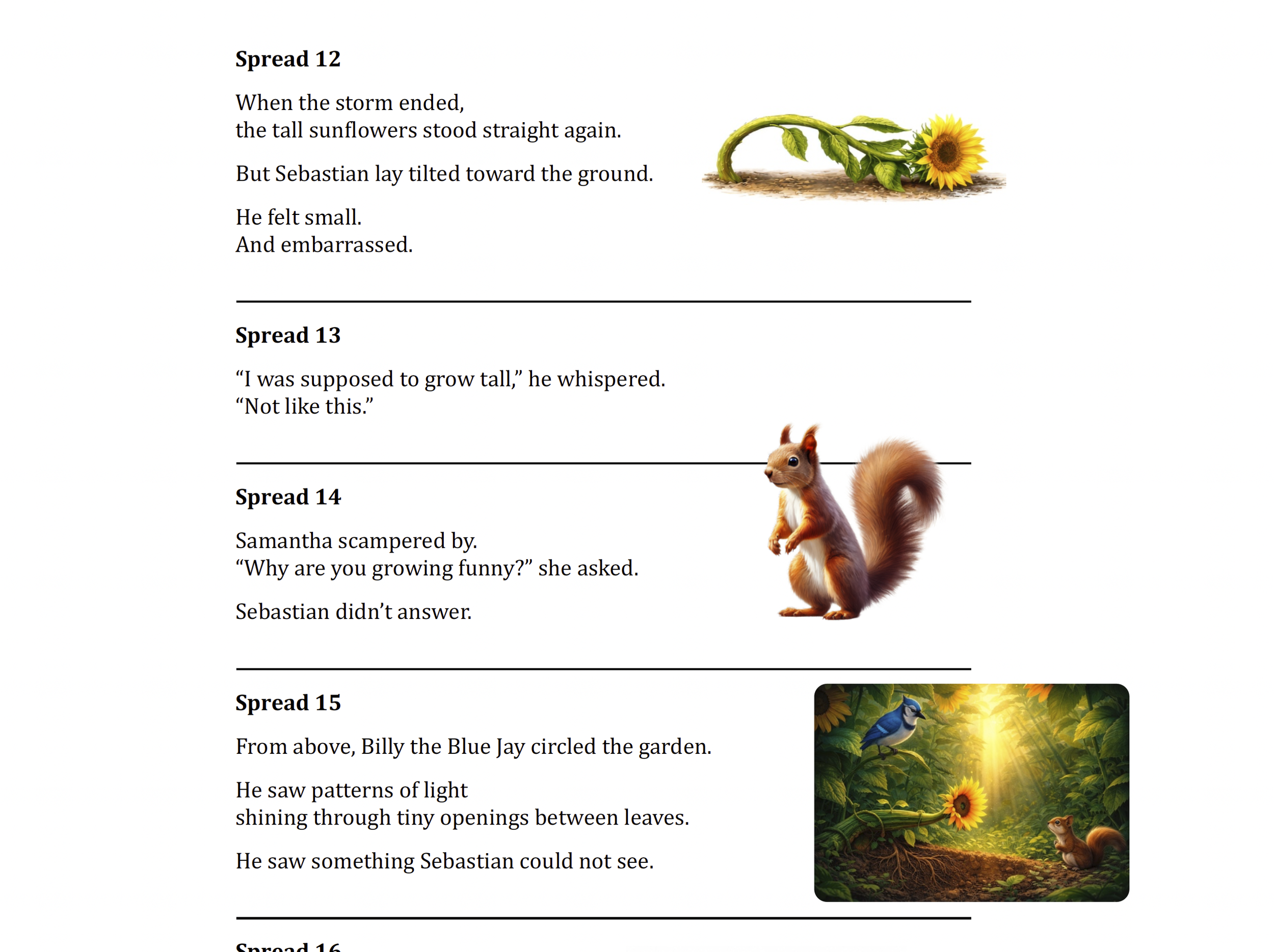
Through the story of Sebastian, a young sunflower knocked sideways by a storm, children learn that setbacks are not the end of growth — they are often the beginning of it.
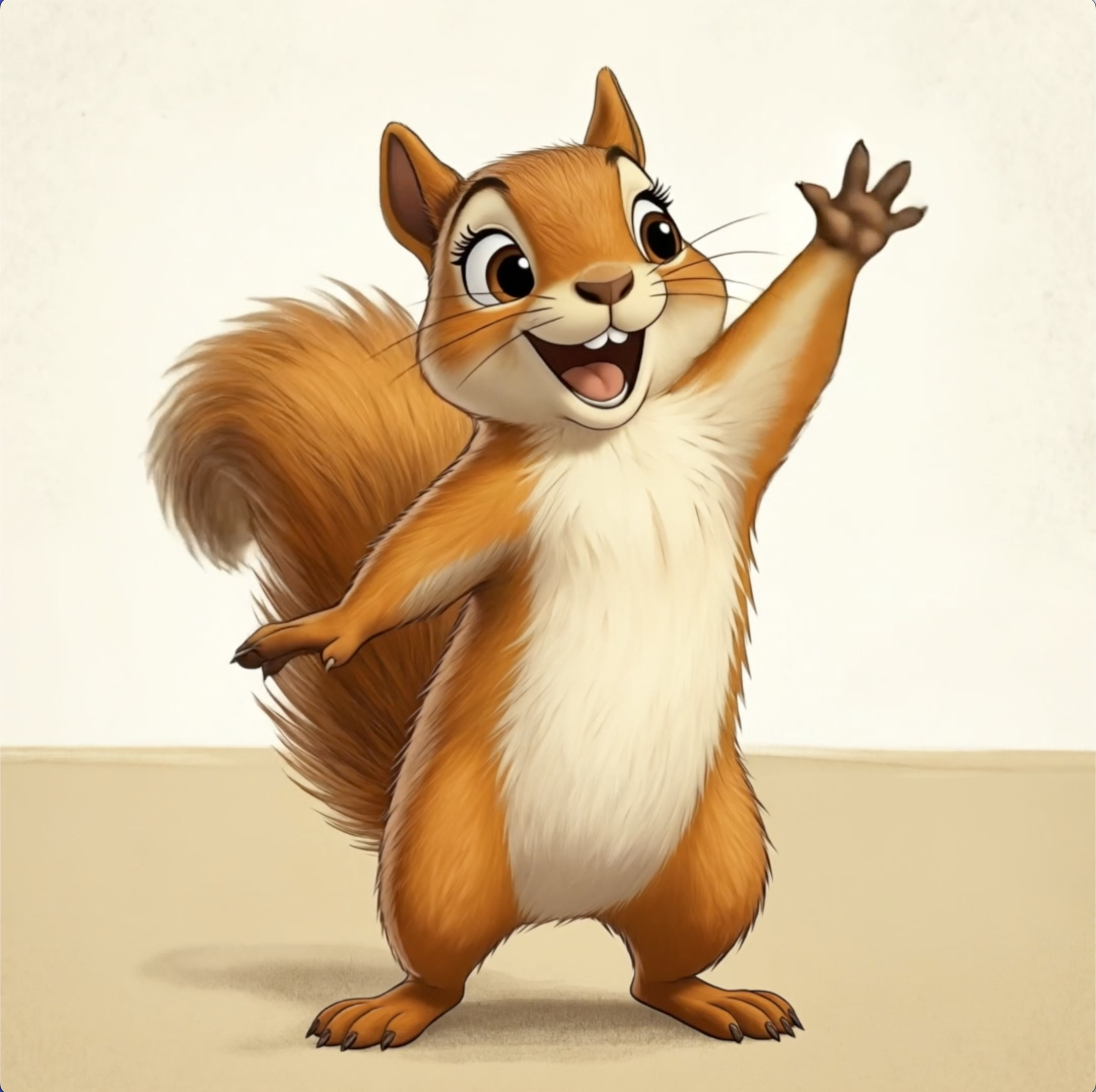
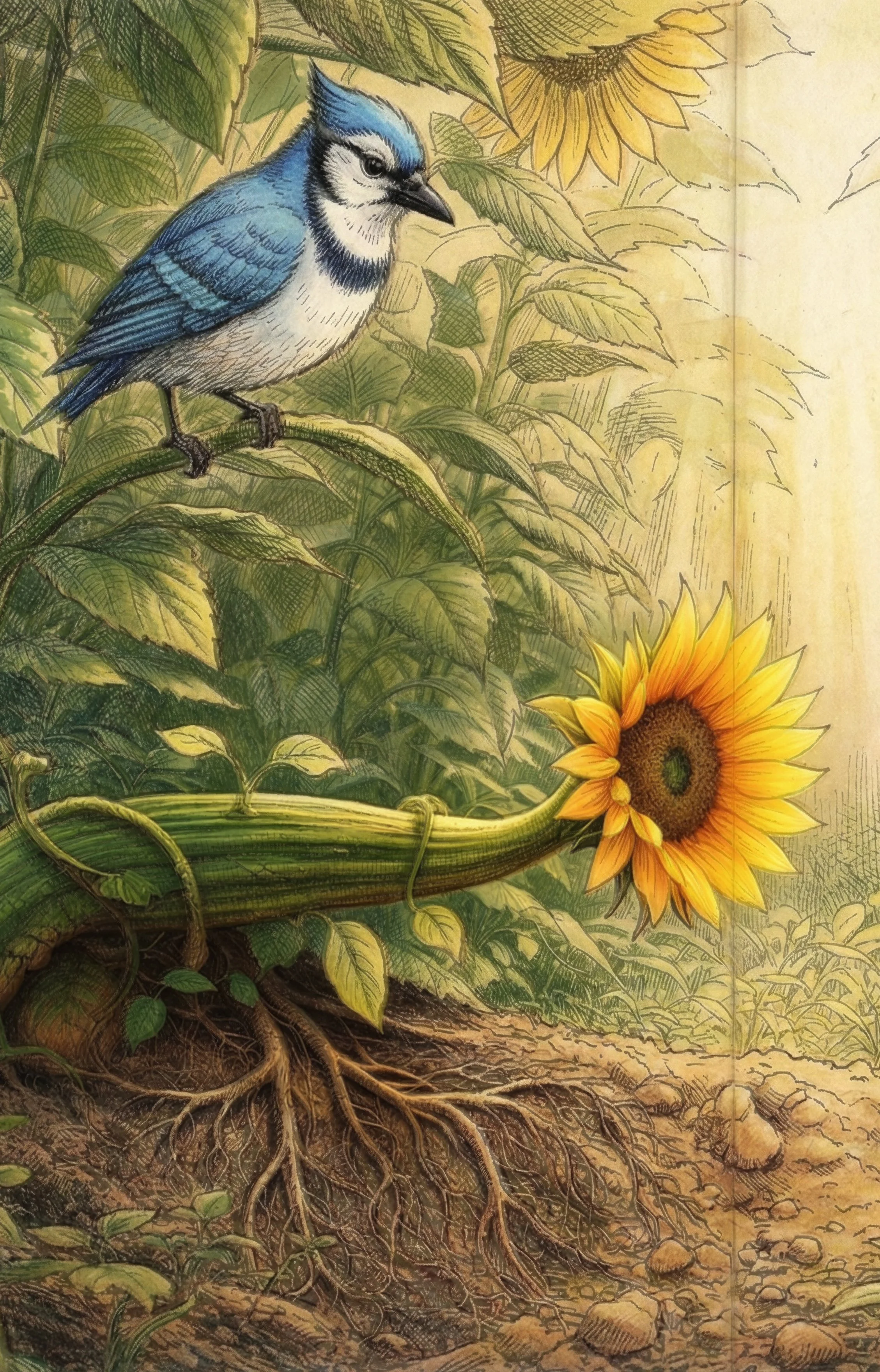
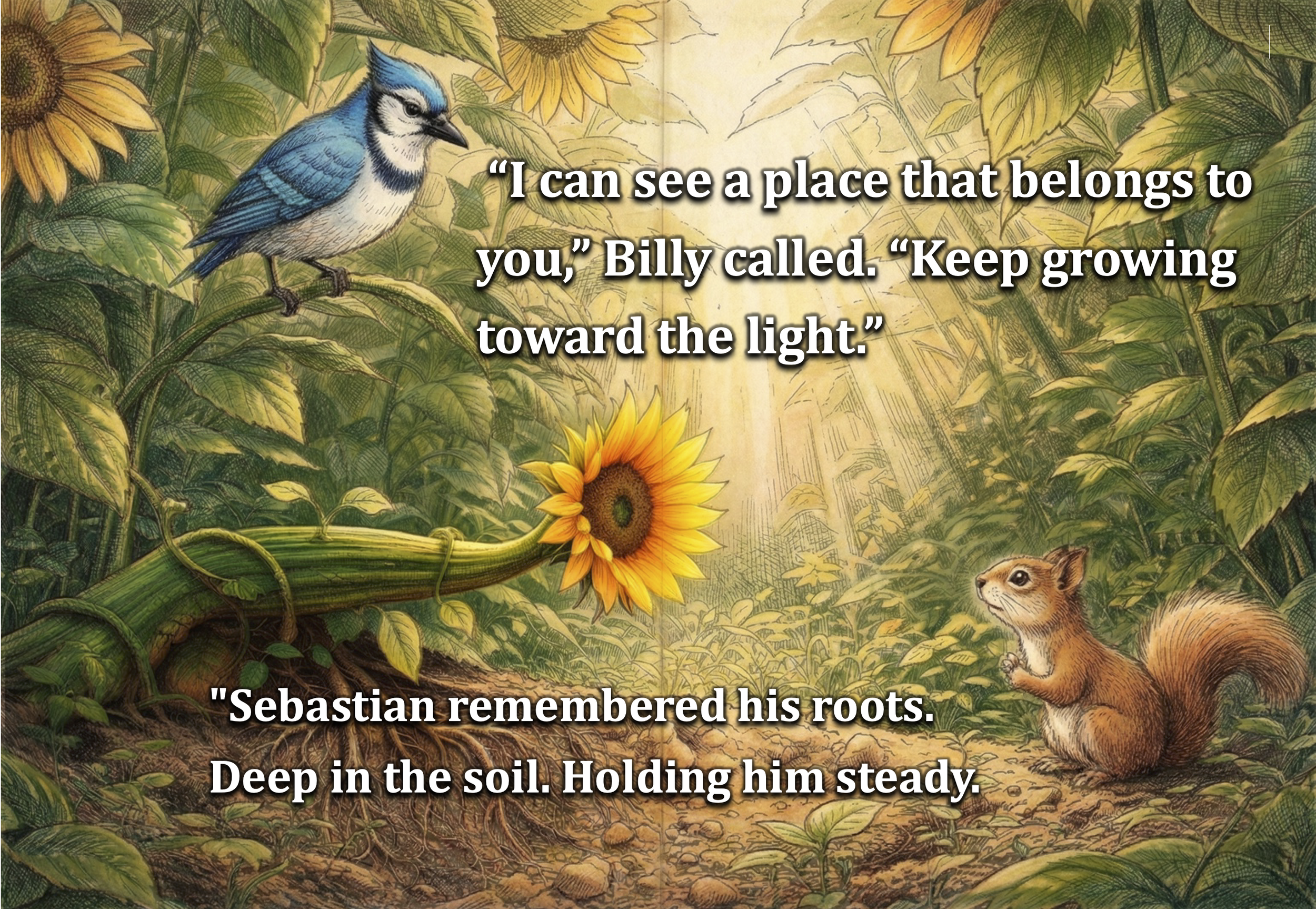
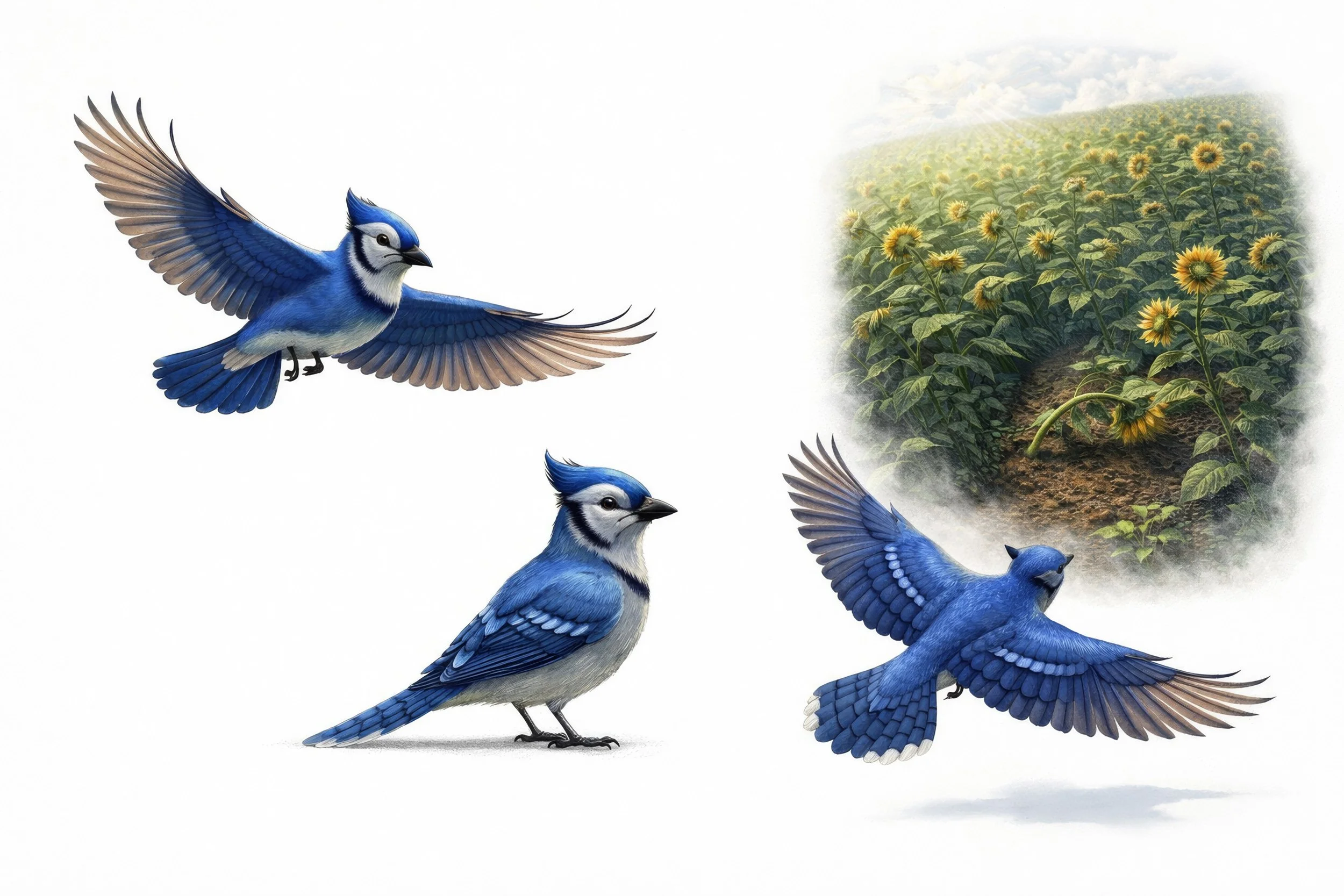
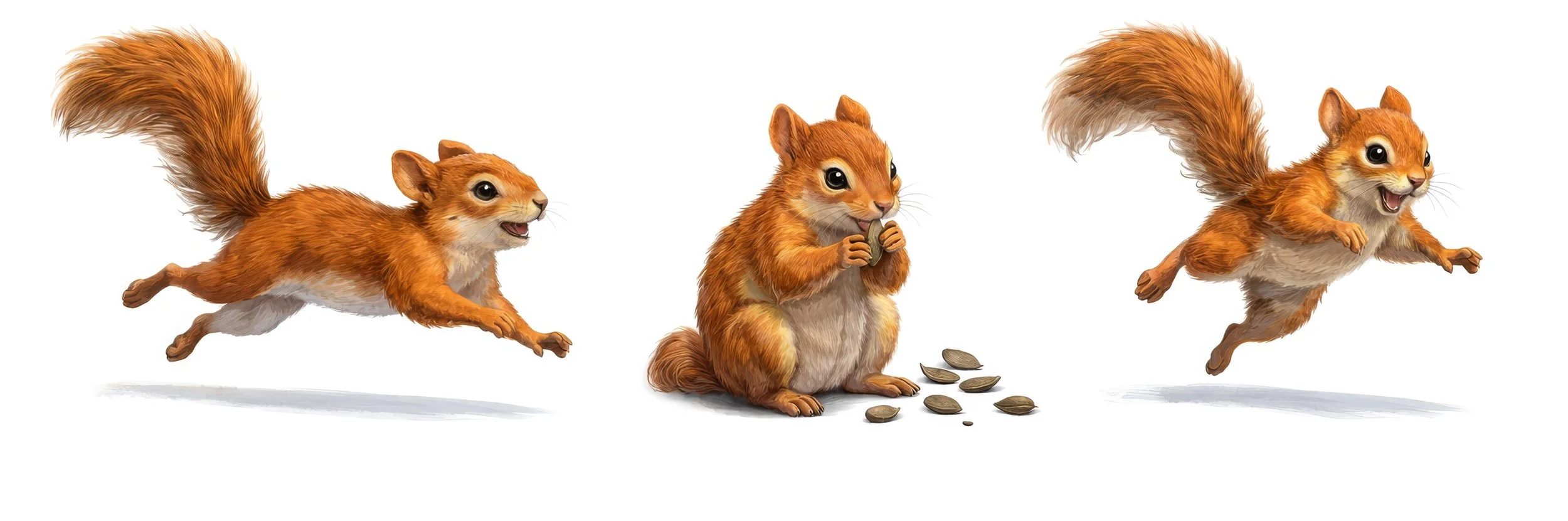
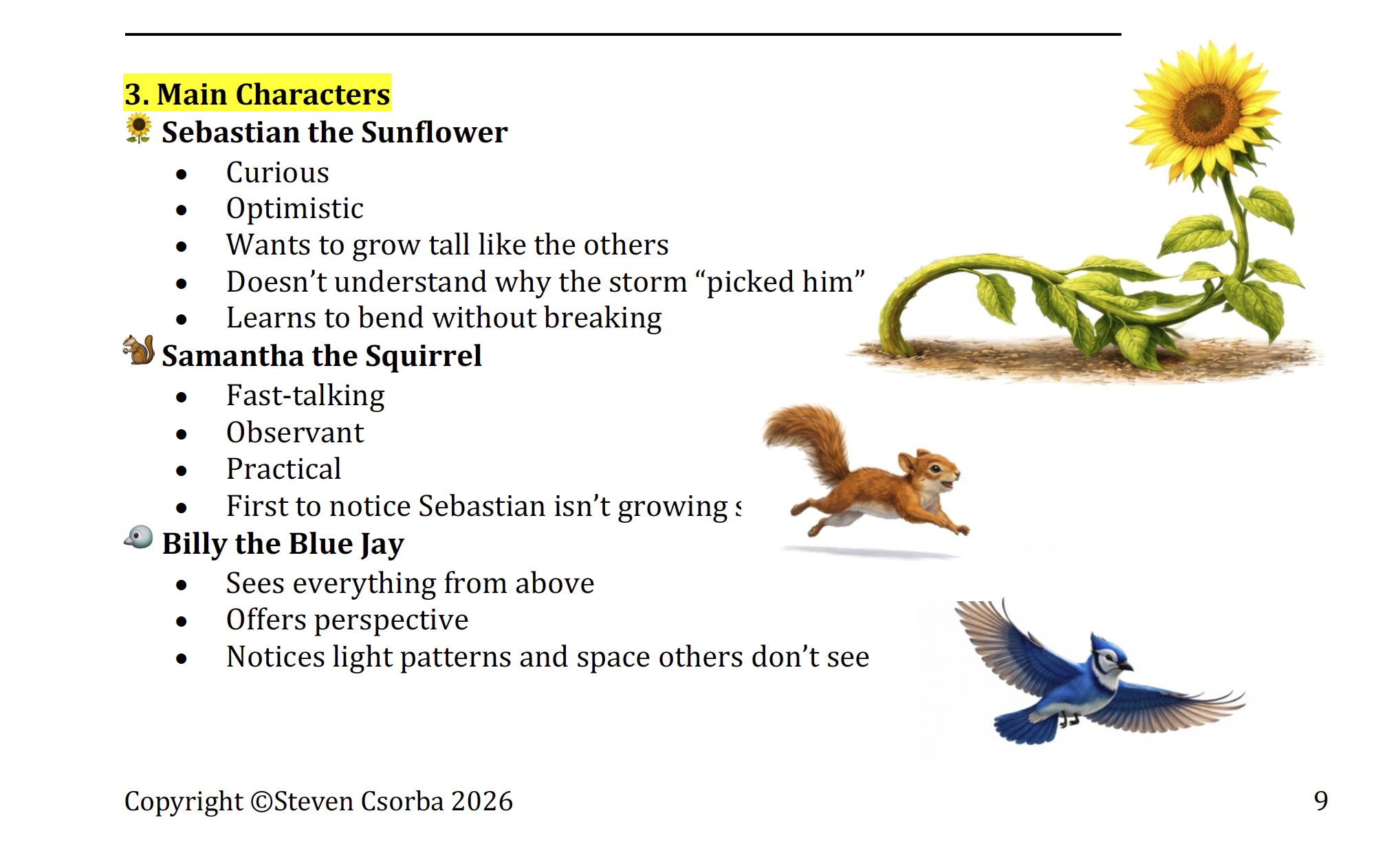
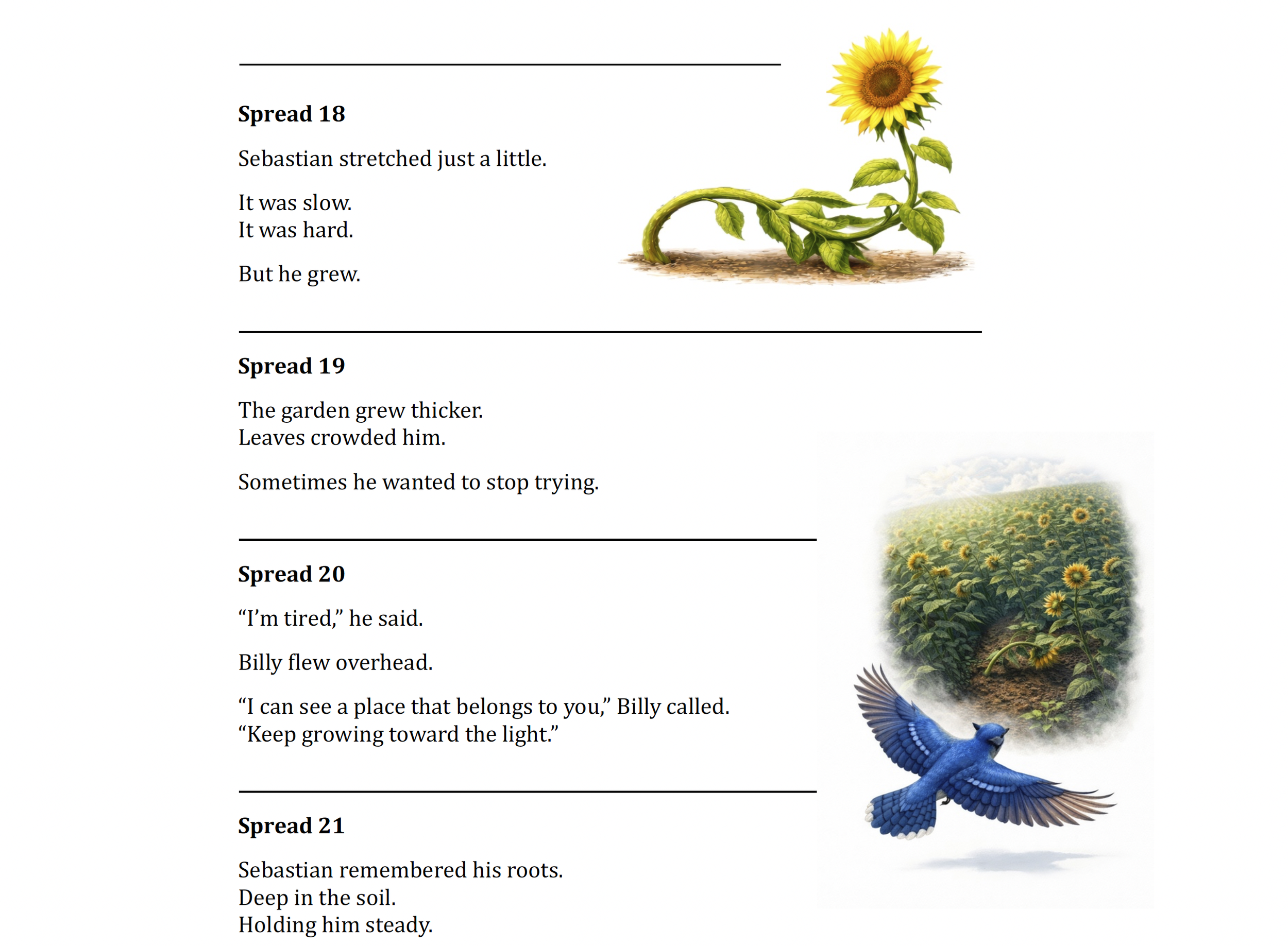
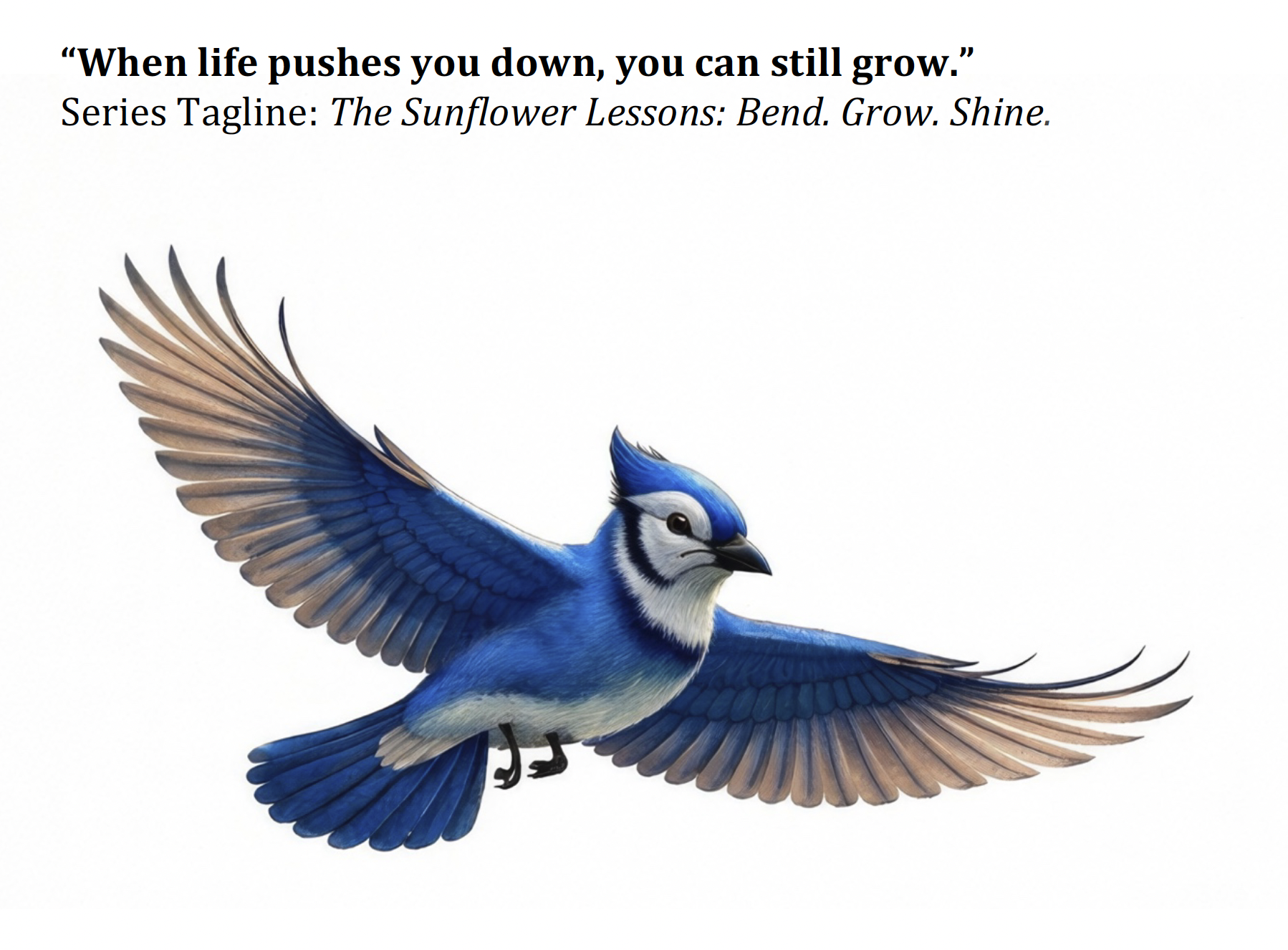
When Sebastian cannot grow upward like the other sunflowers, he must learn to bend, twist, and grow sideways toward a distant patch of light. Along the way, he is guided by Billy the Blue Jay, who sees perspective from above, and encouraged by Samantha the Squirrel, who planted him as a seed and believes in his potential.
-
This story gives children language for resilience:
You may fall.
You may feel tired.
But if your roots are still in the ground,
You can keep growing.
And eventually — You will find the light again.
One Unifying Concept.
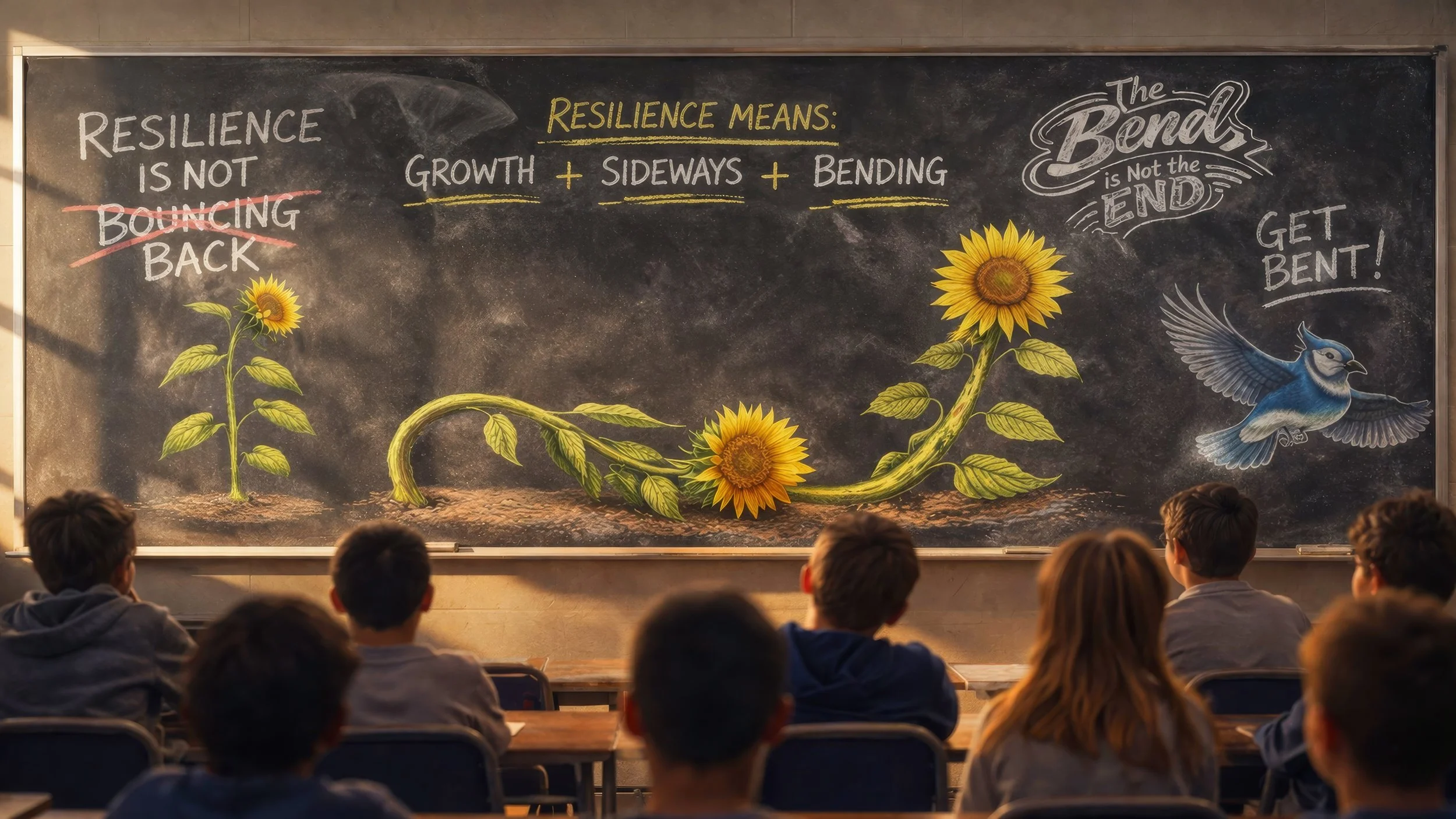
Lessons from the Sunflower is an emerging classroom resource inspired by a simple but powerful question: What if resilience isn’t about bouncing back—but learning how to grow when life doesn’t go as planned?
That insight has led us to begin shaping:
A children’s illustrated book (ages 4-9 years)
A middle/high school classroom experience and resources
And simple teacher tools that make resilience visible, shared, and usable
-
For ages 4–9, Lessons from the Sunflower is a beautifully illustrated storybook—following Sebastian as he is knocked sideways but keeps growing toward the light, helping young children understand resilience in a simple, visual way and showing that even when things feel hard, they can still grow.
-
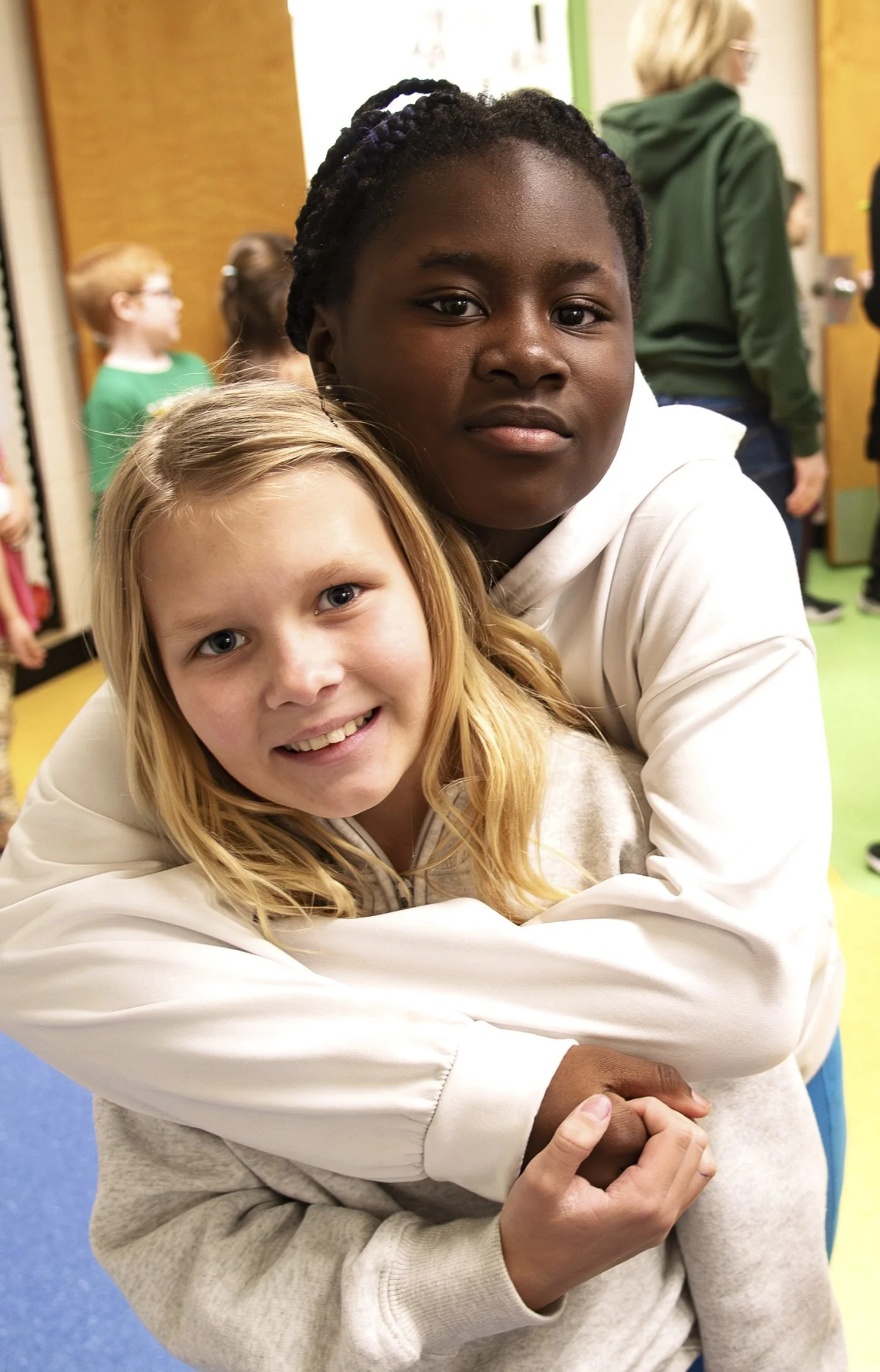
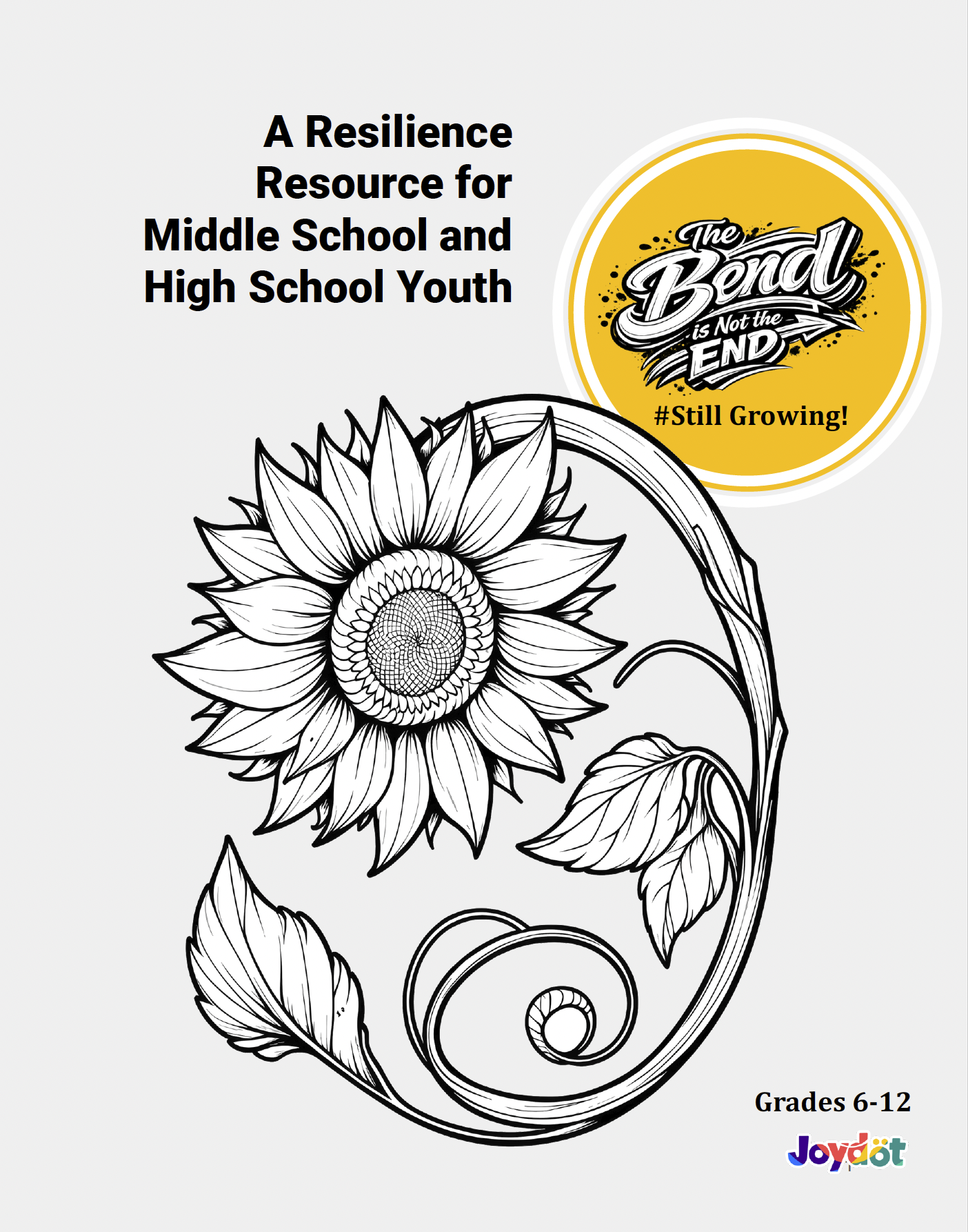
For middle and high school, Lessons from the Sunflower becomes a collective, hands-on classroom experience—each student adds their own challenge and growth, forming a powerful mural where the class builds a large-scale sunflower that represents their shared resilience and shows that this classroom has been through things and is still growing.
Children’s Book Manuscript Ages 4-9 Years (pdf)
Middle & High School Collaborative Resilience Project (pdf)
This Project is Deeply Personal.
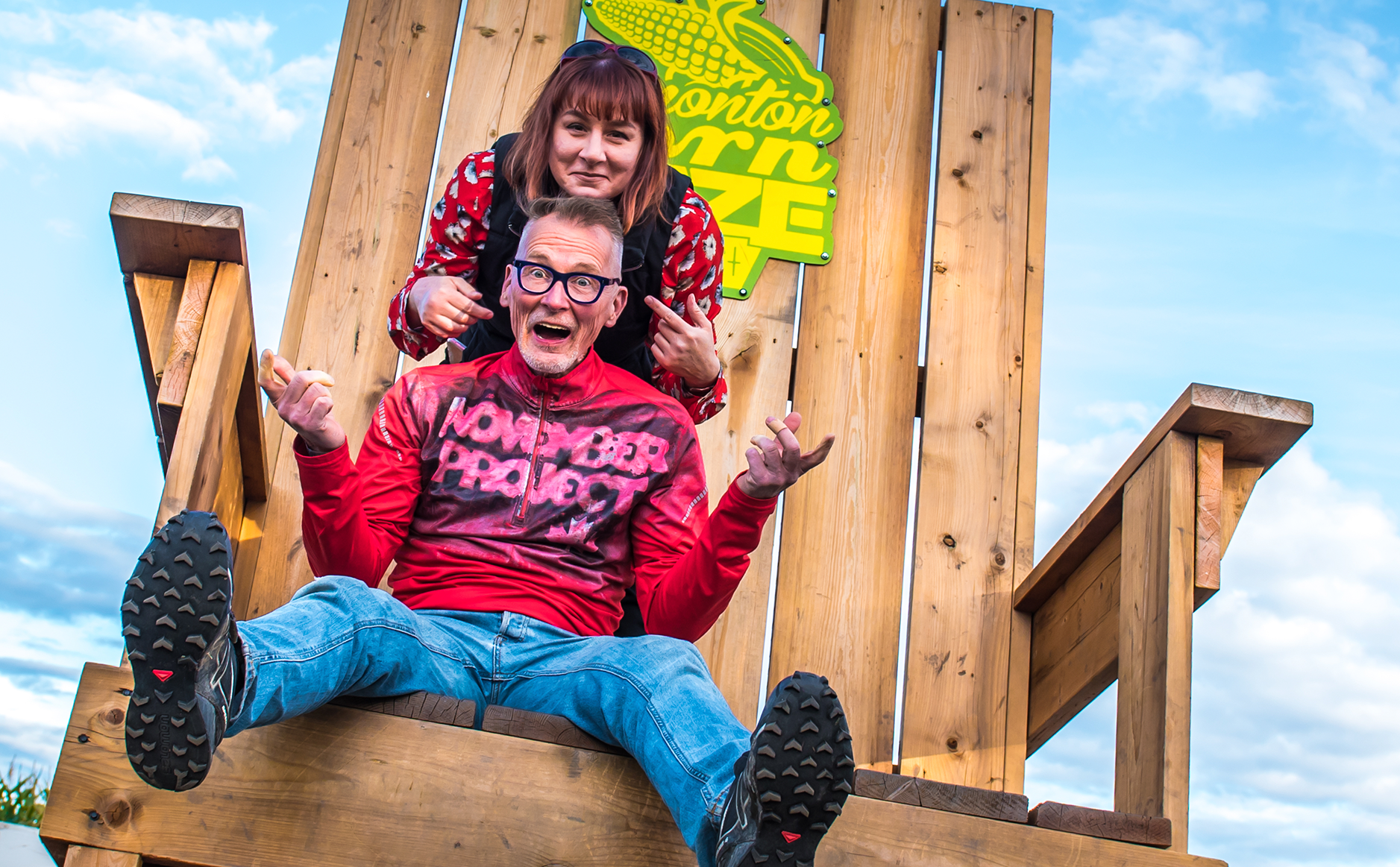
I am a cancer survivor who spent nearly a decade navigating surgeries, radiation, and recovery. There were years when even drinking water was painful. Years of rebuilding what felt broken. Years of learning that bouncing back was not realistic.
Like Sebastian, I could not grow straight upward anymore.
-
I had to grow sideways.
Creative practice, movement, and community became my light. That lived experience shaped my belief that resilience is not toughness — it is adaptive capacity. It is small, steady growth in difficult directions.
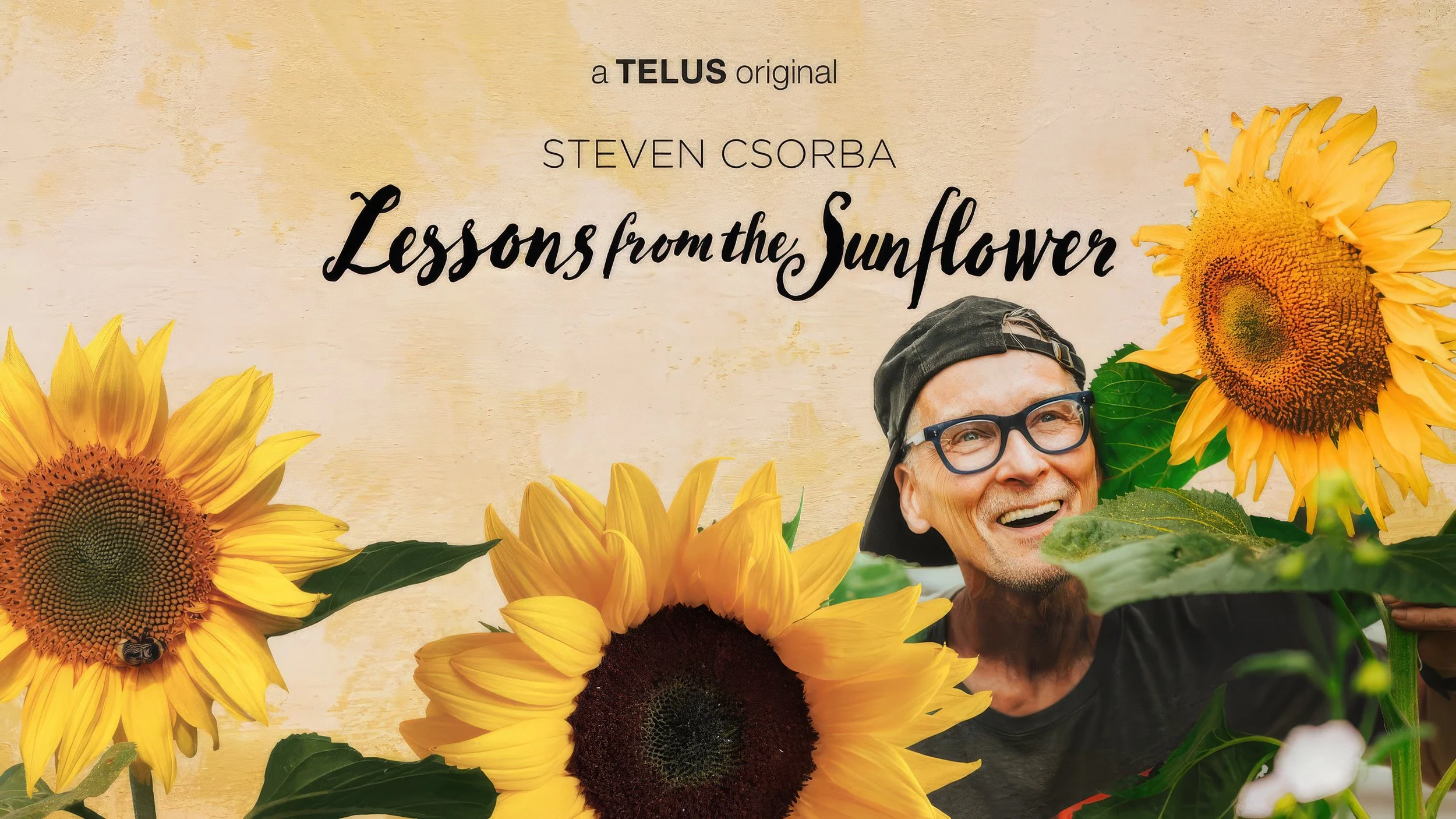
An 83-minute TELUS documentary shares this journey — from cancer to classrooms to community wellness work. This book distills that life lesson into something accessible for children.
Not a memoir.
Not a lecture.
A story.
Recap
-
At the heart of this project is a simple, memorable message: Resilience is not always bouncing back. Sometimes resilience means growing sideways.
For children and youth who are still growing, this metaphor may feel more honest, more compassionate, and more useful. It makes space for struggle, adaptation, support, and hope, without pretending that challenges disappear.
What We Are Exploring
We are currently exploring the development of:
an illustrated student book for younger learners
adapted ideas for middle school and high school learners
a teacher companion guide with classroom strategies and reflection prompts
printable discussion and resilience tools
staff wellness connections for educators
-
Educators are seeing firsthand how many students are navigating stress, uncertainty, emotional overload, and disconnection. We believe resilience tools need to be simple, emotionally honest, visually memorable, and easy to bring into real classrooms.
The sunflower story offers a fresh and accessible entry point into conversations about:
resilience
identity
emotional regulation
hope
perseverance
growth through challenge
asking for help
finding light in difficult seasons
-
This idea did not emerge in isolation. It grew out of real classroom and educator experiences, recent keynote/workshop presentations, and ongoing work with schools focused on student wellness, reflection, and belonging.
We are now gathering educator feedback to help determine:
whether this concept feels useful in classrooms
which age groups it best serves
which formats would be most helpful
what kinds of companion tools educators would actually use
Please take a moment to complete the survey and share any thoughts